
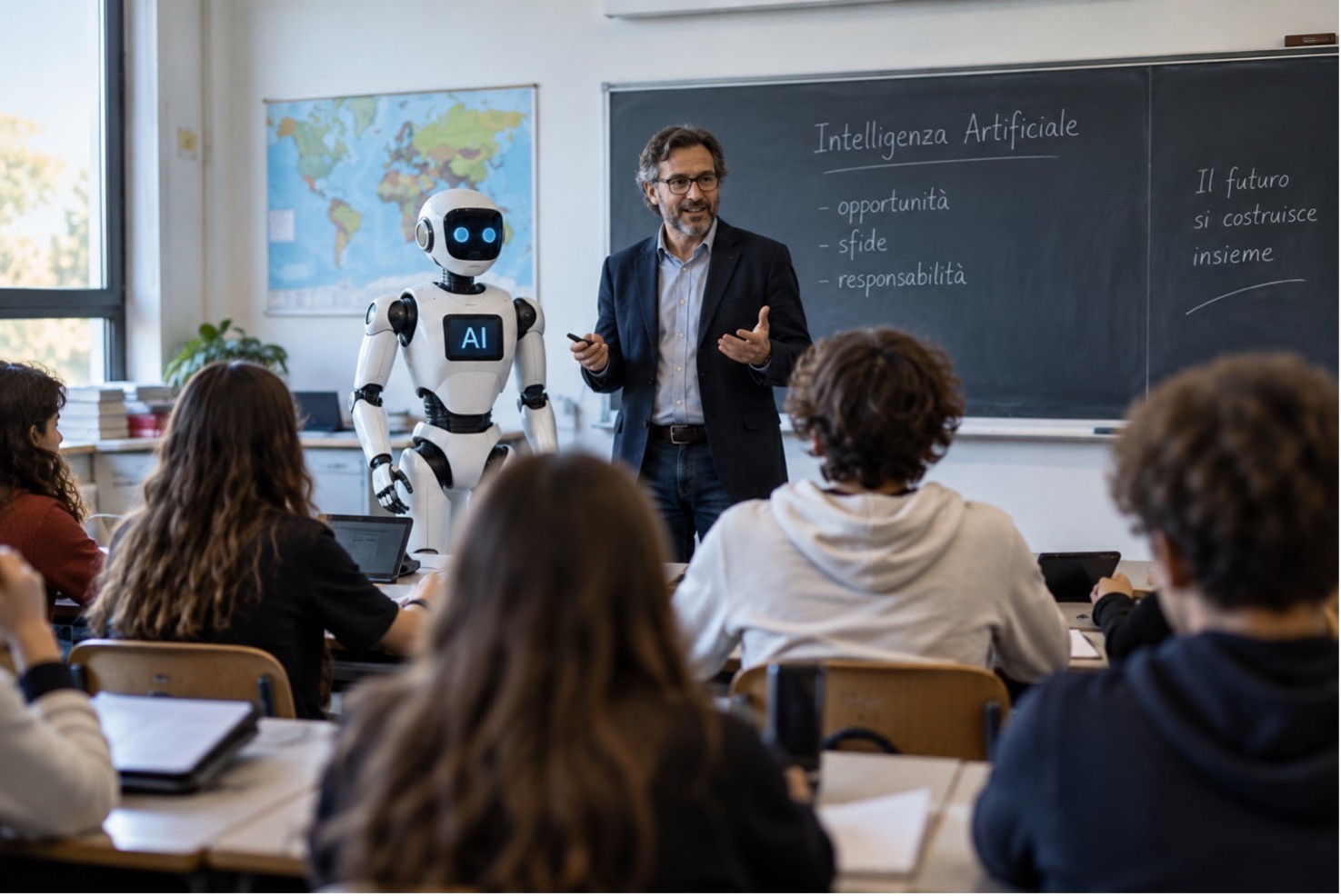
Artificial intelligence has now made its way into schools. After an initial phase marked primarily by students’ spontaneous use of AI tools, guidelines, teacher-training programmes and new ways of integrating AI into teaching are beginning to emerge.
According to Chris Phillips, Global Head of Google for Education, these tools could help address some longstanding challenges in education: large class sizes, differences in students’ abilities and learning pace, and the excessive administrative burden placed on teachers.
Google has introduced several tools specifically designed for education. Classroom now features “Guided Learning” in which AI adopts an approach similar to the Socratic method: rather than immediately providing the answer, it guides students through questions, prompts and suggestions, helping them reach the answer independently. With “Study Notebooks” meanwhile, students can use their own learning materials to generate quizzes and concept maps.
The introduction of AI, however, also carries a risk: that it may become a shortcut replacing study and critical thinking. For Phillips, this makes it necessary to rethink certain traditional teaching methods and, above all, to invest in teacher training. Educators must remain at the heart of schooling, while artificial intelligence should continue to serve as a tool supporting the educational process.
The school of the future could therefore become more experiential. Students would no longer simply receive information but would actively participate in shaping their own learning journey. In a world where facts will become increasingly easy to access through AI, other skills will take on greater importance: synthesising and presenting information, collaborating, building relationships and developing solutions together.
Technology may therefore profoundly change the way we teach and learn, but in the future envisaged by Phillips, it will not eliminate what lies at the heart of education: the human relationship between teacher and student.