During the 224th session of UNESCO’s Executive Board, Monsignor Roberto Campisi, Permanent Observer of the Holy See to the Organization, addressed some of the main challenges facing the fields of education, culture and communication, emphasizing the central importance of human dignity and the common good.
In the field of education, Campisi stressed the importance of the integral formation of the human person, recalling the principles of the Global Compact on Education. Particular attention was devoted to artificial intelligence and digital technologies. The issue, he noted, is not merely technological but also anthropological: it is necessary to consider the impact of digital environments on attention, emotions, thought and imagination. From this perspective, the Holy See looks with interest to the establishment of the UNESCO Observatory on Artificial Intelligence in Education.
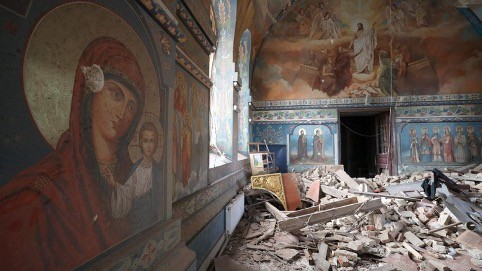
The intervention also focused on the protection of cultural and religious heritage in situations of conflict, with particular reference to Ukraine and the Middle East. The destruction of monuments, places of worship and other cultural assets can result in the loss of the identity and collective memory of peoples. Their protection therefore represents not only a legal and moral obligation, but also an essential element for the resilience of communities and for future processes of reconciliation and reconstruction.
Turning to communication, Campisi also recalled the importance of freedom of expression, the safety of journalists and media education. Especially in situations of war, information must not become propaganda. Communication should instead remain at the service of truth and the common good, countering disinformation and helping to overcome polarization and divisions through the responsible and ethical use of new technologies.