
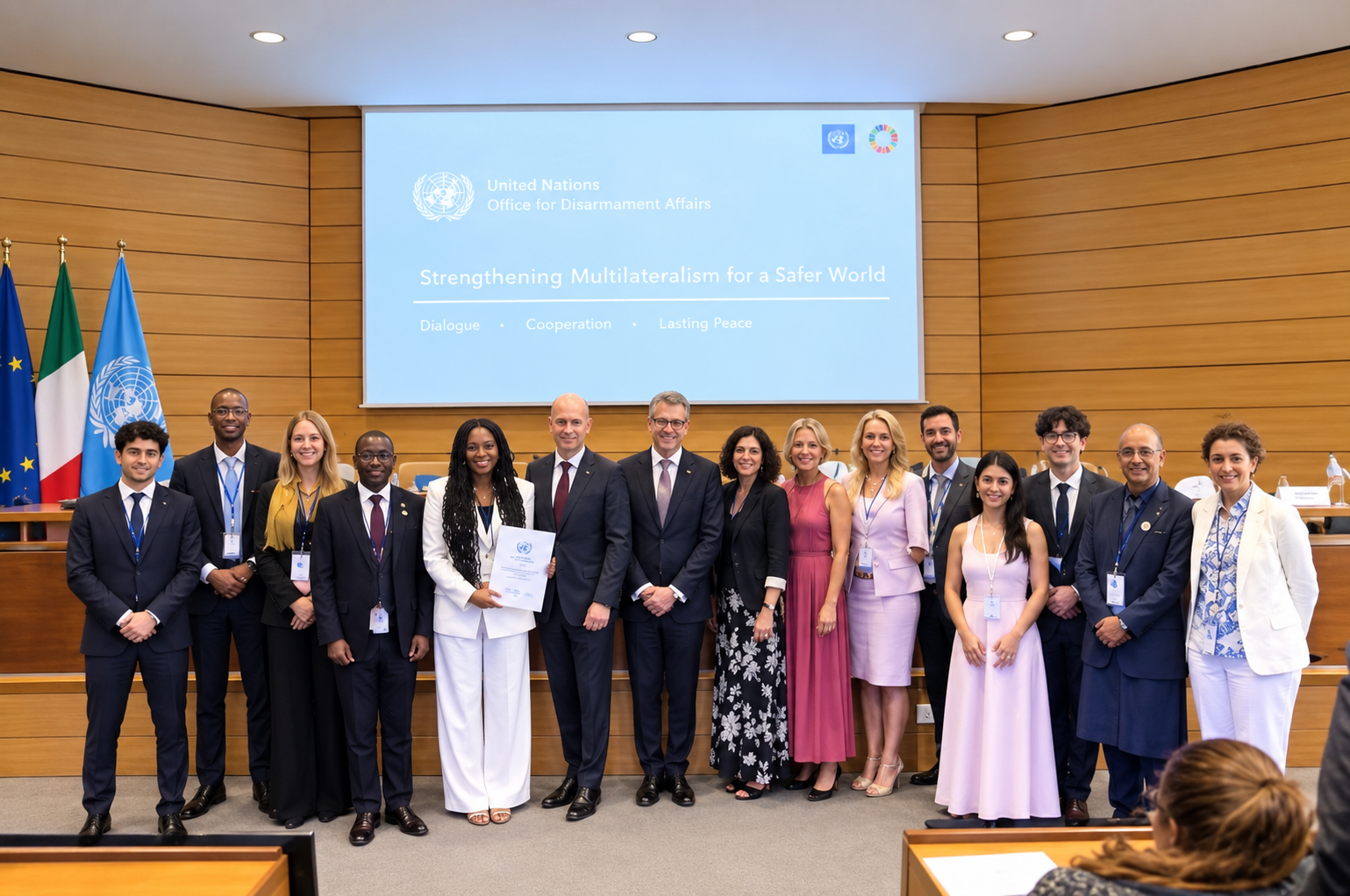
On the occasion of UNESCO’s 80th anniversary, 145 young people from 135 countries presented an appeal for a “new culture of peace” in the 21st century, during a ceremony presided over by French Minister for Europe and Foreign Affairs Jean-Noël Barrot and UNESCO Director-General Khaled El Enany.
The central message is clear: young people no longer want to be merely the recipients of public policies; they are asking to be recognised as actors and partners in peace processes, conflict prevention and reconciliation. Their participation, including within international institutions, should therefore not be limited to a symbolic role, but should translate into genuine involvement in decision-making processes.
The Appeal also stresses that peace is built not only through diplomacy and negotiations, but also in schools, universities, laboratories, the media and digital spaces. Education therefore plays a fundamental role: developing critical thinking, understanding differences, distinguishing disagreement from hatred and learning how to engage in dialogue are becoming essential tools for countering disinformation, manipulation and polarisation.
Particular attention is also given to freedom of information and independent journalism, as well as to science and international cooperation, which are regarded as instruments capable of building bridges between peoples and countries. The Appeal also highlights the importance of culture and memory, so that history is not used to fuel new divisions, but instead contributes to mutual understanding and the protection of cultural heritage.
Among the challenges addressed is artificial intelligence. Young people do not reject its development, but call for it to be properly regulated and directed towards the service of peace, while also claiming the right to participate in decisions concerning technologies that are set to have a profound impact on their future.
Addressing the younger generations, Barrot urged them to use the “weapons of the mind” against falsehoods and hate speech and to build bridges rather than walls. Eighty years after UNESCO’s founding, the Appeal thus renews one of the Organization’s fundamental principles: to build the defences of peace in the minds of women and men, transforming this ideal into concrete commitment in schools, universities and civil society.