
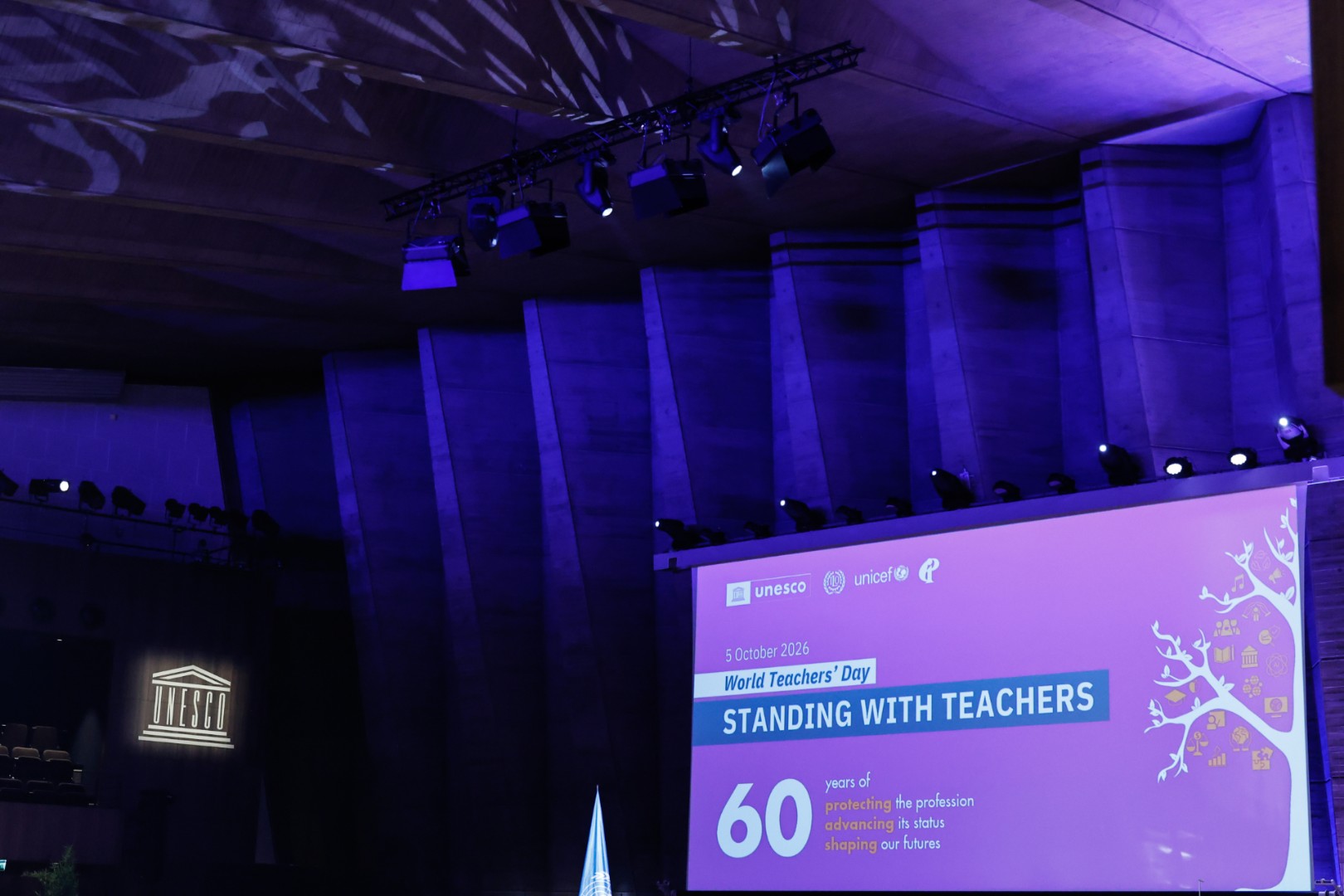
World Teachers’ Day is celebrated on 5 October. Established in 1994, it recognises the fundamental role of teachers in educating and shaping new generations. The Day commemorates the adoption of the 1966 UNESCO-ILO Recommendation concerning the Status of Teachers, an international reference document that defines teachers’ rights and responsibilities, as well as the principles governing their training, recruitment and working conditions.
The 2026 edition holds particular significance, as it marks the 60th anniversary of the 1966 Recommendation. This year’s theme, “Standing with Teachers: 60 Years of Protecting the Profession, Advancing Teachers’ Status and Shaping Our Future”, invites reflection on the challenges currently facing education, including digital transformation, climate change, inclusion and migration.
The global celebration, held at UNESCO Headquarters in Paris, featured high-level discussions dedicated to protecting and enhancing the teaching profession, as well as the award ceremony for the UNESCO-Hamdan Prize for Teacher Development, now in its ninth edition.
In a joint message issued for the occasion, UNESCO, the International Labour Organization (ILO), UNICEF and Education International called upon governments and the international community to ensure that teachers are provided with adequate conditions to fully carry out their educational mission and contribute to building more inclusive, peaceful and sustainable societies.
World Teachers’ Day thus provides an opportunity to reaffirm that investing in education means, first and foremost, recognising and supporting those who, through teaching, accompany the human, cultural and social development of new generations. From this perspective, valuing the teaching profession represents an essential commitment to promoting quality education that is accessible to all and oriented towards the integral development of the human person.